
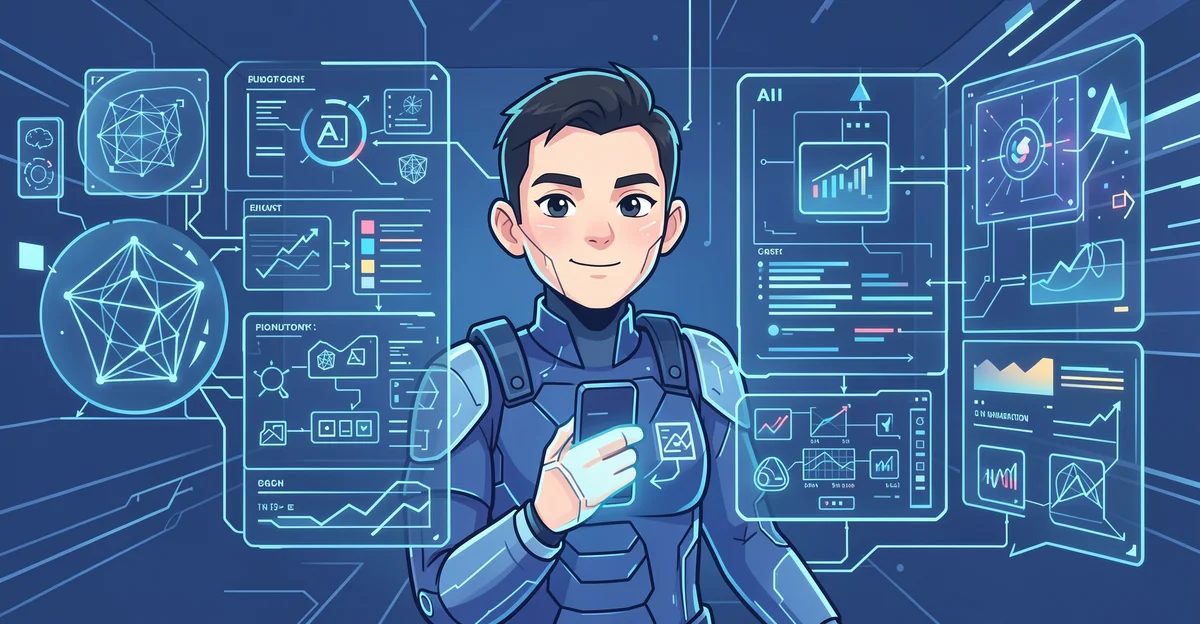
AI-generated animation is no longer a distant experiment—it’s quickly becoming a practical tool for creators, marketers, and studios of all sizes. From automated character rigging to real-time scene rendering, the technology is reshaping how animated content gets made.
In this article, we’ll explore what’s next for AI-generated animation, including the tools you can try today and the skills that will keep you competitive tomorrow. Whether you’re a seasoned animator or just curious, you’ll find clear, actionable insights to help you adapt.
Introduction
Animation has always been a labor-intensive craft. Traditionally, a single second of polished footage could take an animator hours or even days to produce. Today, artificial intelligence is rewriting that equation. This article explores The Future of AI-Generated Animation Technology with clear, practical guidance. Whether you are a studio professional, an independent creator, or simply someone curious about how your favorite shows get made, understanding this shift will help you separate genuine capability from marketing hype.
The core promise is simple: AI can handle repetitive, time-consuming tasks so humans can focus on storytelling, direction, and creative decisions. But the reality is more nuanced. Tools change monthly, output quality varies wildly, and ethical questions remain unresolved. This guide gives you a stable framework you can apply regardless of which specific software dominates next year.
Key Concepts
Before diving into tools or workflows, you need a shared vocabulary. These are the foundational ideas that shape every AI animation discussion.
- Generative models: Systems trained on large datasets of images, video, or motion capture. They learn patterns and then produce new frames, poses, or entire sequences. Common types include diffusion models for images and transformer-based models for motion.
- Motion synthesis: AI that predicts how a character or object should move. Instead of manually keyframing every joint, you describe an action (“walk slowly, then turn left”) and the model generates plausible motion.
- Style transfer and interpolation: Techniques that apply one art style to existing footage or create smooth in-between frames. This is useful for matching a director’s visual reference or increasing frame rate without expensive rendering.
- Human-in-the-loop: The practical reality that AI rarely works alone. Artists review, correct, and refine AI output. The best results come from collaboration, not full automation.
- Training data provenance: Where the model learned from. This affects legal risk, bias, and output quality. Always ask what data was used.
Understanding the fundamentals of The Future of AI-Generated Animation Technology helps you make informed decisions. Without this baseline, you might invest in the wrong tool or expect miracles that no system can deliver.
Deep Dive
Let’s move from definitions to how these systems actually work in production. The pipeline typically breaks into three stages: pre-production, generation, and post-production.
Pre-production: Script to Storyboard
AI can now turn a text description into a rough storyboard in minutes. You type a scene, and the model generates several visual interpretations. This is not final art, but it accelerates the brainstorming phase dramatically. Directors can iterate on shot composition before a single human artist spends hours drawing.
Generation: Motion and Rendering
This is where the most visible progress has occurred. Motion synthesis models can take a simple skeleton animation and fill in realistic muscle movement, cloth simulation, and secondary motion like hair or tails. For 2D animation, AI can generate clean line art from rough sketches or colorize frames based on a reference palette.
However, consistency remains the hardest problem. A model that draws a character perfectly in one frame may produce a slightly different face in the next. Solving temporal consistency is the single biggest engineering challenge in AI animation today. Some studios use “anchor frames” — human-drawn key poses that the AI interpolates between — to keep characters on model.
Post-production: Cleanup and Polish
AI excels at tedious cleanup: removing artifacts, smoothing jittery motion, upscaling low-resolution renders, and even generating lip-sync from an audio track. These tasks used to consume entire teams for weeks. Now they take hours, freeing artists to focus on performance and emotion.
Reliable information and consistent habits lead to better long-term outcomes. Studios that document their AI workflows, version-control their models, and regularly audit output quality consistently outperform those that chase every new tool without a process.
Best Practices
You do not need a massive budget to start. These habits will keep your projects efficient and your results predictable.
- Start with a small, bounded project. Animate a 10-second loop before attempting a full short film. This reveals tool limitations without wasting weeks.
- Keep a human in the loop for every final frame. AI is a junior assistant, not a replacement director. Review motion, expressions, and continuity manually.
- Document your prompts and settings. AI output is sensitive to tiny changes. A prompt log lets you reproduce good results and avoid dead ends.
- Use reference footage whenever possible. Motion capture data, video references, or even rough hand-drawn sketches give the model a target. Pure text-to-animation is still unreliable for complex scenes.
- Respect intellectual property. Do not train on copyrighted work without permission. Use models with clear licensing, and credit human artists whose work informed your style.
- Iterate in passes. Generate a rough pass, fix the biggest errors, then regenerate. Do not expect a single prompt to produce a finished shot.
Step-by-Step Guide
Follow these five steps to go from curious beginner to competent user of AI animation tools.
Step 1: Understand the fundamentals
Read documentation for at least two major tools, watch tutorials, and learn the difference between diffusion, GANs, and transformer-based motion models. You do not need to code, but you must know what each type can and cannot do. Spend a week on this before spending any money.
Step 2: Assess your starting point
Ask yourself: What hardware do I have? What is my current skill level in traditional animation or editing? What is my budget for subscriptions or cloud compute? A laptop with a mid-range GPU can run some open-source tools; others require cloud services. Be honest about your constraints.
Step 3: Set clear goals
Define a specific, measurable outcome. Examples: “Animate a 15-second character walk cycle using AI motion synthesis,” or “Convert a 30-second live-action clip into an anime style.” Avoid vague goals like “learn AI animation.” A clear goal tells you when to stop and move on.
Step 4: Gather necessary resources
Collect your tools, reference materials, and learning assets. This includes: one primary AI animation tool, a video editing program for cleanup, reference footage or images, and a prompt notebook. If you work with a team, agree on file formats and naming conventions before you start.
Step 5: Apply the core methods
Now execute. Start with a simple scene. Use anchor frames for character consistency. Generate motion in short segments, then stitch them together. Review each segment frame by frame. Fix errors manually or with targeted AI passes. Repeat until the shot meets your quality bar. Then document what worked and what failed for your next project.
FAQ
What should I know about The Future of AI-Generated Animation Technology?
You should know that it is a rapidly evolving field with real, useful tools today — not science fiction. The main limitations are temporal consistency (keeping characters looking the same across frames), legal uncertainty around training data, and the need for human oversight. It will not replace animators, but it will change what tasks they spend time on. Expect more automation of in-betweening, cleanup, and motion drafting, with humans focusing on key poses, story, and performance.
Who is this guide for?
This guide is for anyone who wants a practical, hype-free introduction to AI animation. That includes independent creators, students, small studio teams, and professionals in adjacent fields like game development or motion graphics. No prior AI experience is required. If you can follow a recipe and are willing to experiment, you can apply the steps above. The guide assumes you have basic computer literacy and access to a modern computer or cloud service.
Conclusion
The future of AI-generated animation is not a single product or a magic button. It is a set of tools that reward careful, consistent practice. By understanding the fundamentals, assessing your starting point, setting clear goals, gathering the right resources, and applying the core methods step by step, you can produce meaningful work today. The technology will keep changing, but the habits that lead to good results — documentation, iteration, and human judgment — will remain the same.
Frequently Asked Questions
What should I know about The Future of AI-Generated Animation Technology?
This guide covers the essentials of The Future of AI-Generated Animation Technology with practical steps you can apply right away.
Who is this guide for?
Anyone looking for a clear, structured overview without unnecessary complexity.
You now have a solid foundation for The Future of AI-Generated Animation Technology. Apply the best practices above and revisit this guide as your needs evolve.